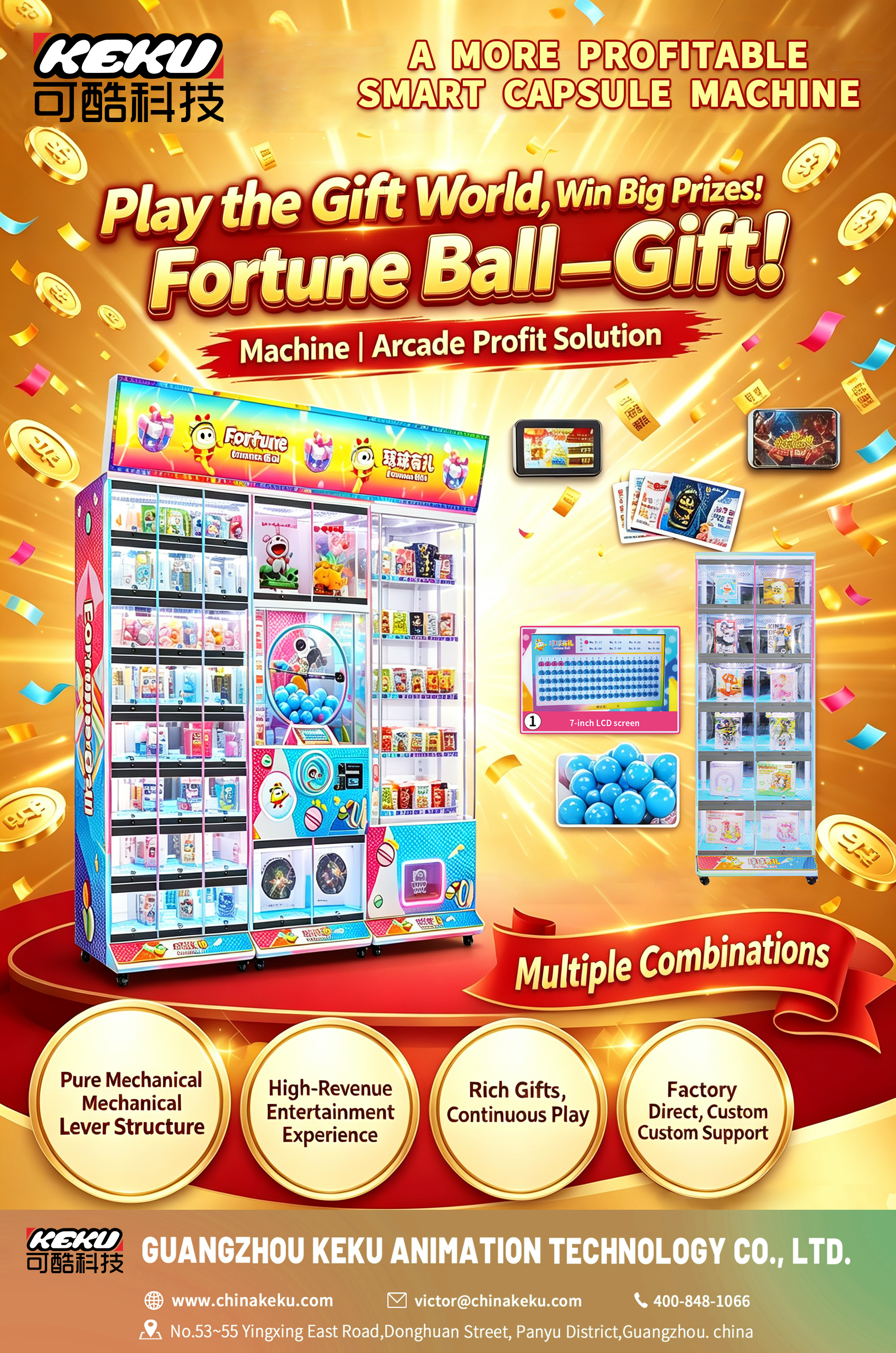
GERGERDA Smart Capsule Machine
Introduction
Within the commercial self service amusement equipment industry, many brands prioritize finished product shipment volume while overlooking defective product control, a core detail. For smart capsule machines deployed long term in shopping malls, commercial plazas and campus premises, equipment with flaws or non conforming components that enter the market bring more than frequent breakdowns and high operation maintenance costs. They also damage brand reputation for on site operators, reduce repeat purchase revenue and may even create safety risks.Specializing in commercial self service equipment, GERGERDA Smart Capsule Machine consistently adheres to the quality control principle of “zero defect components, zero fault complete units, zero hidden hazards in the marketplace”. In contrast to the industry’s extensive shipment model, we have built a full process, standardized and traceable closed loop system for screening, isolating, handling and reviewing defective products. Covering component incoming inspection, complete unit manufacturing, finished product testing and after sales returns, this system comprehensively prevents defective units from entering commercial scenarios and safeguards stable business operations for our partners.
1. Industry Pain Point: Unchecked Defective Products The Hidden Profit Killer for Operators
Most capsule machine brands available on the market lack robust defective product management mechanisms. Products with minor blemishes or latent faults are shipped without restriction, creating multiple operational headaches for end users. These risks are further amplified for intelligently controlled equipment running in high frequency commercial environments:
- Frequent Breakdowns and Revenue Loss from Downtime: Latent defects including worn transmission parts, deformed tracks, poor wiring contact and malfunctioning smart modules trigger faults such as capsule jams, failed capsule dispensing, QRcode scanning failures and duplicate charges. Frequent equipment outages directly result in lost foot traffic revenue.
- Cumbersome Maintenance and Soaring Costs: Without standardized solutions for nonconforming units, repeated troubleshooting and component replacement consume substantial time, labor and material expenses, drastically squeezing profit margins.
- Degraded User Experience and Eroded Reputation: Equipment malfunctions during capsule dispensing and cosmetic imperfections severely impair user experience, lowering repurchase rates and harming longterm site reputation.
- Severe Safety Risks: Hazards such as leaking electrical assemblies, sharp edges on structural parts and poorlyfitted casings may cause physical injuries including bumps and electric shocks, exposing operators to compliance risks and potential disputes.

2. Definition and Classification of GERGERDA Defective Products: Precise Judgement with No Ambiguous Clearance
Departing from the industry’s lenient “good enough” standards, GERGERDA strictly follows commercial equipment safety specifications and factory acceptance criteria. All non conforming products and components are categorized with clear defect severity levels for tiered management and targeted remediation, eliminating grey areas entirely.
- Cosmetic Defects: Units with scratches, paint peeling, deformation, color deviation, burrs or excessive assembly gaps on outer casings, decorative panels and racks; plastic parts with discoloration, shrinkage or damage; sticker labels that lift or have blurry printing. Though these do not disrupt basic functionality, they fail commercial aesthetic requirements and are prohibited from reaching endmarket locations.
- Structural Defects: Frames with coldjoint or missing welds failing load bearing specifications; distorted chassis frames, sticky or ill fitting access panels; misaligned storage bins and dispensing tracks; failed fasteners or springs. Such units tend to loosen and malfunction over extended operation and are fully classified as defective.
- TransmissionFunction Defects: Gears with binding, slippage or chipped teeth; bent rotating shafts producing abnormal noise; dispensing tracks with excessive resistance or failed buffering; units failing capsule dispensing accuracy benchmarks including idling jams, partial dispensing and zero output. These constitute core functional defects for assemblies and complete machines.
- Smart Electrical Defects: Main control boards prone to freezing, garbled output or poor antiinterference performance; faulty scanning / coin acceptor modules causing recognition failures or billing anomalies; short circuited, leaking or aged wiring; malfunctioning light panels and push Unstable intelligent control systems create both safety and operational risks.
- Critical Safety Defects: Components with sharp edges, excessive hazardoussubstance content; electrical assemblies lacking protective measures or overload short circuit protection; structurally unstable casings at risk of detachment. Units endangering personal safety or property are classified as critical defects, subject to direct scrapping and prohibited from repair or reuse.
3. GERGERDA Full Process Closed Loop Defective Product Management System: Eliminate Hazards at the Source
Instead of relying solely on post sales support to resolve issues, GERGERDA implements front loaded defective product control spanning five key stages: incoming raw material inspection, production line assembly, finished product testing, warehousing outbound procedures and after sales return handling. This forms a complete closed loop workflow ensuring every shipped GERGERDA Smart Capsule Machine is fully compliant.
- Incoming RawMaterial Inspection: Block Defective Components at the Source Upon delivery, all structural, transmission, electrical and consumable components undergo combined sampling and full scale inspection by the quality control team against component specifications. Any parts failing thickness requirements, material standards, workmanship criteria or functional tests are rejected, barred from warehouse intake and excluded from production. This prevents defective assemblies from being built using substandard parts.
- InProduction Patrol Inspection: Real Time Troubleshooting and Immediate Rectification A dedicated position based patrol inspection system applies throughout assembly. Operators conduct self checks upon completing each production step; specialized quality control staff re examine every unit, focusing on transmission gear meshing precision, electrical wiring layout and chassis structural stability. Semi finished items found defective during manufacturing are marked, isolated and withheld from further processing. They only proceed to subsequent workflow stages after on site remediation and passing re inspection, avoiding batch scale defective output.
- Final FinishedProduct Inspection: Multi Layer Testing to Prevent Flawed Shipments After full assembly, every unit must pass four rounds of final validation: a 72 hour continuous power on test, tens of thousands cycle capsule dispensing simulation, high low temperature environmental adaptability testing, and comprehensive payment scanning functional verification. Only units passing cosmetic, structural, functional, intelligent system and safety assessments receive labels for warehousing. Detected defective finished units are logged in the defective product registry, stored in segregated zones and strictly kept apart from conforming inventory.

Cross-Border Commercial Capsule Machine
Summary: Rigorous Defect Control Underpins Long Term Profitability for Commercial Equipment
A high quality commercial smart capsule machine should be evaluated not merely by specifications, appearance and smart features, but also by the brand’s defect management philosophy and execution. Shipping flawed hardware cuts short term production costs yet erodes partner reputation and long term revenue — a short sighted industry practice.
GERGERDA consistently upholds quality benchmarks. Through its full process closed loop defect management framework covering raw materials, manufacturing, inspection, outbound logistics and after sales support, multi stage screening guarantees no flawed hardware circulates, no defective units leave the factory and no hazardous equipment enters the market. Moving forward, we will keep refining quality control workflows and defect classification standards. With robust product performance, we empower all partners toward sustainable low fault, cost effective and high yield commercial operations.
Frequently Asked Questions
Q1: Many capsule machine faults stem from latent issues. How does GERGERDA guarantee shipped units carry zero hidden defects?
A: Most competing brands only perform superficial appearance checks and basic function verification. Numerous latent electrical and transmission system faults escape detection and surface only after commercial deployment. GERGERDA operates a five stage closed loop quality control system covering incoming component checks, production phase oversight, finished product validation, warehousing outbound protocols and after sales return management. Defective materials are intercepted at the component source; issues are corrected during production patrol inspections. Prior to shipment, every finished unit completes four rigorous test suites: 72 hour continuous power on runtime, high frequency capsule dispensing simulation, environmental adaptability assessment and intelligent function validation. Latent faults are comprehensively screened out, ensuring delivered equipment runs reliably at commercial sites.
Q2: What is GERGERDA’s resolution mechanism if customers receive units with minor defects? Will complaints be handled perfunctorily?
A: GERGERDA applies standardized tiered defective product handling and never dismisses any flaw. For minor cosmetic or assembly related defects, specialist technicians carry out comprehensive rework and polishing; repaired units undergo a second full inspection before delivery. For moderate functional failures, entirely new compliant components are fitted followed by a full recreation of factory standard testing protocols to eliminate root cause faults. Units with critical safety related defects are mandatorily scrapped; they will never be resold at discounted prices or re entered into service after repair. Full traceable records are maintained throughout the process. We respond promptly to customer requests to maximally safeguard stakeholder interests.
Q3: What tangible business benefits can strict defective product control bring to commercial deployment projects?
A: For commercial investors, the core value of defect management lies in cost reduction, efficiency improvement and revenue stabilization. First, faults such as capsule jams, scanning malfunctions and system freezes are prevented at source. Equipment maintains round the clock stable operation without frequent downtime for repairs, capturing all foot traffic revenue opportunities. Second, time and capital expenditure on maintenance, component replacement and on site troubleshooting is greatly lowered to boost net profit. Third, reliably operating equipment with intact aesthetics elevates user satisfaction and repeat consumption while preserving long term site reputation. This enables sustainable deployment featuring low operating costs, minimal breakdowns and high returns.
