Capsule Machine
Introduction
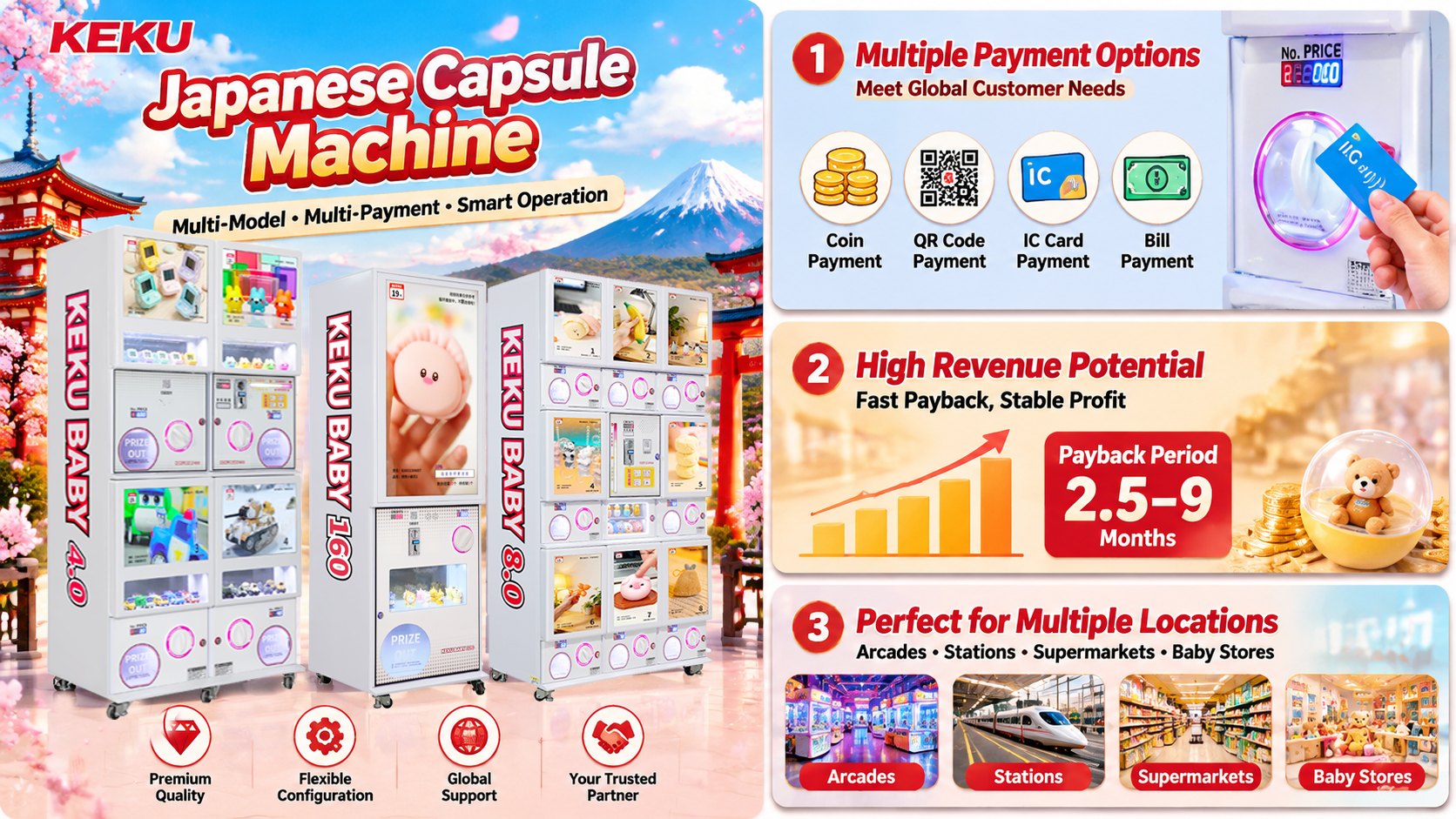
Distributors weighing a Japanese roll out tend to ask one question before any other: how long until a site hands back what it cost. KEKU has spent several years placing GERGERDA smart capsule machine units the 4.0, 5.0, 8.0 and GERGERDA 160 and recording what each pitch returned. The short answer is that site type outweighs any single line on a spec sheet. An arcade floor, a station concourse, a supermarket atrium and a baby goods shop draw four different kinds of buyer, and each pays back at its own speed. Anyone budgeting an overseas smart capsule machine investment should read the figures below as averages from many placements rather than promises: the spread inside one site type is wide, and the smart capsule gift machine placement payback period moves with position, gift quality and the venue’s cut.
1. Four site types, measured
1.Arcades: quickest money the GERGERDA 8.0 smart capsule machine suits them best
Arcade visitors arrive intending to spend, and they spend on collectibles. That single fact puts amusement arcade smart capsule profitability ahead of every other site type we tested. The 8.0’s large screen sells from across the room, and its multiple bins keep a queue moving. Measured payback ran 2.5 to 4 months; one peak season site cleared its cost inside two. What it costs: the venue wants the biggest share of any channel, rival operators crowd the same floor, and gifts must be swapped often enough that a stale bin never sits untouched for a week.
2.Stations: steady all day the GERGERDA 160 fits the footprint
Interchanges are the opposite case. Nobody there plans to buy, yet thousands pass within arm’s reach. The station self service smart capsule has to be narrow, sturdy and clear of the walking line. The GERGERDA 160 is exactly that: upright, slim, with a locked body that has survived years of crowds. Payback sat between 4 and 6 months. Traffic barely dips with the seasons, which helps. The trade off is that most buyers tap once and move on, bins empty quickly, and the cabinet takes rougher handling than anything else we run.
3.Supermarkets: the middle ground the GERGERDA 5.0 smart capsule machine carries the most volume
Entrance halls mix families, teenagers and tourists within the same hour, so one gift lineup will not cover the crowd. The 5.0 is modular: each bin takes its own product, letting a single cabinet hold plush, figures and key chains side by side. Payback measured 5 to 7 months. Landlords here work on formal contracts, and joint operation terms are easier to settle than in arcades. Weekends run hot, weekdays run cold, so the mix needs re setting on a schedule instead of being left to drift.
4.Baby goods shops: slow but durable the GERGERDA 4.0 smart capsule machine as a mother and baby store trendy toy gift machine
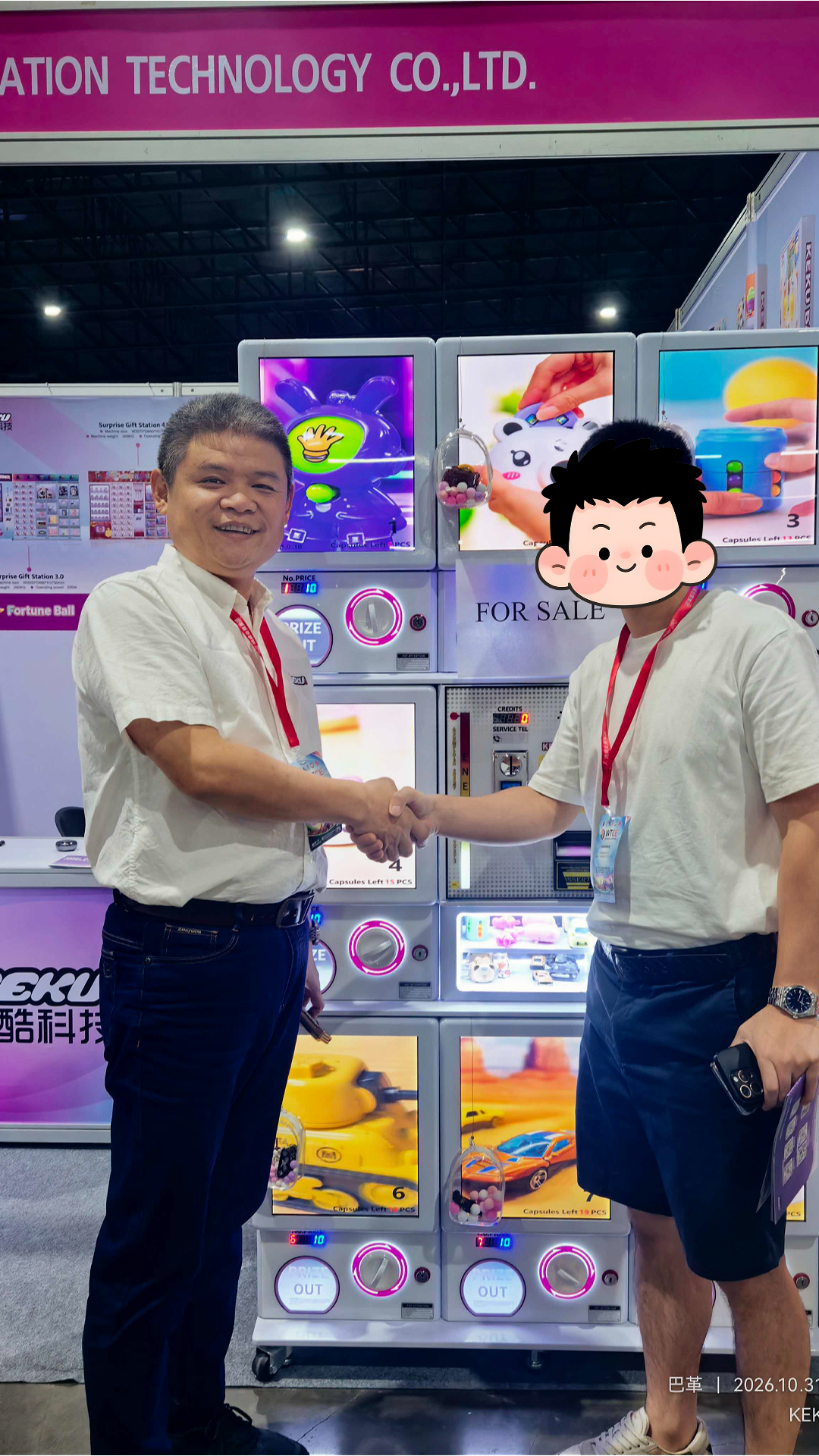
Here the buyer is a parent, the user is a toddler, and safety settles every argument. The 4.0 has a soft chamber, rounded edges and takes only small capsules, which is why this channel gets it. Payback stretched to 6 to 9 months. Competition is thin and the shopkeeper welcomes the extra draw, so retention holds. The catch: few people walk through the door, spend per visit is capped, and every gift has to clear Japanese toy safety rules before it enters a bin.

overseas smart capsule machine investment
2. Why the gap is so wide?
1.Spending intent differs by site, and it fixes both model and gift
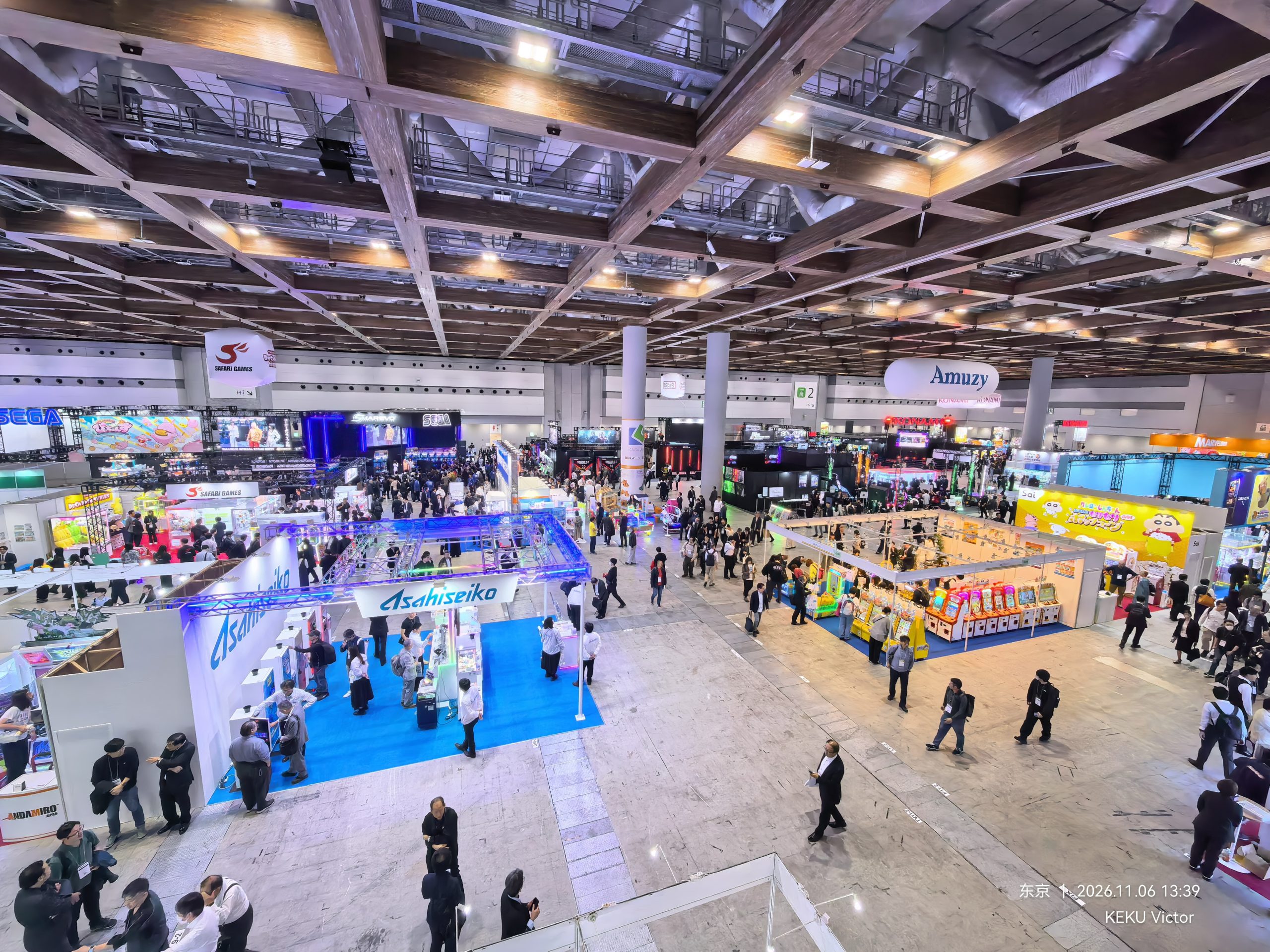
Arcade players hunt a specific item and keep feeding coins until they find it, so a bright screen and a deep bin of the current set do the selling. A commuter has thirty seconds and no plan, so the cabinet must never obstruct anyone. Supermarket traffic is mixed, where variety beats depth. A parent buys with a child in one hand and reads the safety label with the other. Get this wrong the mistake we see most often in smart capsule operation at Japanese locations and even a good pitch crawls toward payback.
2.The venue’s cut decides whether a site is worth having
Arcades take a percentage, and a large one. Stations usually charge a flat fee for the spot. Supermarkets will discuss rent free joint operation or a small share. Baby shops cost least to enter. Price the terms before the machine: a high share pitch needs the revenue ceiling of the 8.0, while a cheap, quiet pitch belongs with the 4.0 or the GERGERDA 160, where the outlay stays small.
3.Bin size sets the servicing rhythm
A mismatch shows up as an empty cabinet with a queue standing in front of it. The 8.0 holds enough for a busy arcade floor. The 5.0 lets one bin be refilled without disturbing the others, which is what makes supermarket rotation practical. The GERGERDA 160 sits in the middle, and one person can service a scatter of station sites in a morning. The 4.0 holds less fine for a shop that sees twenty children a day, wrong for a mall.
smart capsule operation at Japanese locations
3. Three ways to combine them
1.Chase a fast return: arcade 8.0 plus major station 160
For operators who need the capital back inside a year. Put the GERGERDA 8.0 smart capsule machine on the best arcade floor you can negotiate and let it carry revenue, then place the GERGERDA 160 at two or three busy interchanges to hedge. Keep the count per site low: two cabinets competing on one floor split the same spend and slow each other down.
2.Build a steady stream: supermarket 5.0 plus baby store 4.0
For operators thinking in years rather than quarters. Roll the GERGERDA 5.0 smart capsule machine across a chain under one back office and one restocking route, then put the GERGERDA 4.0 smart capsule machine into independent baby shops where rent stays low. Neither channel spikes. Together they smooth out.
3.Cut the hidden costs
Every model in the range the 4.0, the 5.0, the 8.0 and the GERGERDA 160 reports revenue and stock to a remote dashboard and accepts Japanese coins, notes, IC cards and QR payment. Map the servicing route before the first machine ships, agree a lead time with your gift supplier, and keep a maintenance calendar. An empty cabinet and a dead cabinet cost exactly as much as a bad site.
GERGERDA 4.0 smart capsule machine
Frequently Asked Questions
Q1: Same model, same site type why does one unit clear its cost in ten weeks and another take half a year?
A: The ranges above are averages across many placements, and three things move the number: where inside the site the cabinet stands, whether the gift currently inside is wanted, and what the venue takes. An 8.0 at an arcade entrance and an 8.0 in its back corner are two different businesses. Test before committing seven to fourteen days on site produces real takings, and those takings tell you whether to buy more units.
Q2: First time in Japan where should a newcomer start?
A: Not with arcades. The 8.0 belongs there, but the negotiation is hard and the competition already stands on the floor. Begin with the GERGERDA 5.0 smart capsule machine in a supermarket: forgiving traffic, straightforward terms, and enough quiet to learn how Japanese settlement, gift sourcing and site rules actually work. Prove that first, then add the 8.0, the GERGERDA 160 and the GERGERDA 4.0 smart capsule machine as the map widens.
Q3: Does compliance differ across the models when shipping to Japan?
A: The hardware side is simple every model is configured for Japanese voltage and payment. Gifts are where the risk sits. The 4.0 goes into baby shops, so its capsules must meet Japanese toy safety standards without exception. The 8.0, the 5.0 and the GERGERDA 160 sit in arcades, stations and supermarkets, where licensed IP keeps you clear of trouble. Compliant stock plus routine servicing is the whole of it; skip either and you invite a removal order or a fine.
