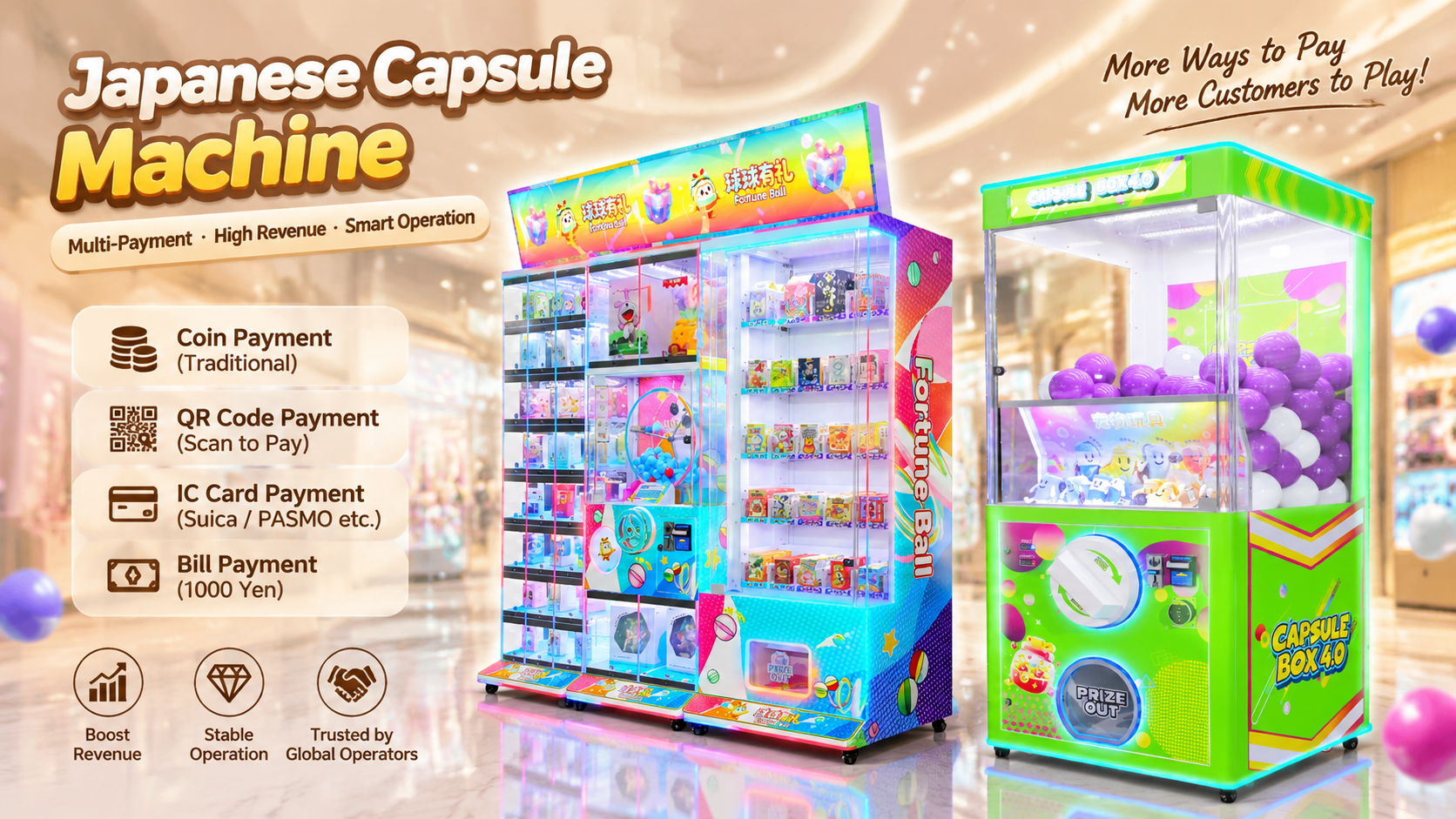
Japanese capsule machine
Introduction
Japanese capsule market is mature, crowded and easy to misread. Operators arriving from overseas usually study cabinet styling and IP line-ups first, then treat payment as plumbing. The result is a well-dressed Japanese capsule machine that serves only the customers who happened to arrive with coins, and quietly turns away everybody else. Coin drops, IC taps and phone scans each open a different door onto the same street. Neighbourhood regulars, daily commuters and inbound tourists do not share a payment habit, and no single channel reaches all three.
This guide works through each channel in turn: who it serves, what it earns, where it leaks money, and how to combine them. The point is not to bolt every option onto every cabinet, but to fit the payment mix to the crowd standing in front of it — the single decision in Japan capsule point operation that moves revenue, cabinet utilization and maintenance cost the most.
1. Coin payment: tradition that still earns, and the reason to add more
Coin and bill insertion is the oldest and most widespread way to pay in Japan, and it still underpins most established locations. It needs no network, which makes it dependable on suburban shopping streets, in small community shops and in regional towns where connectivity is patchy. There are no channel fees, so every yen collected stays with the operator, and long-standing players still trust the mechanical crank as part of the ritual. On a site selling a 100-yen base capsule, coin mode keeps the floor volume steady.
1.Who reaches for coins
Two groups dominate. The first is older local residents who never stopped carrying change; coin circulation is a long habit in Japan, and many people leave the house with a purse of small denominations. The second is inbound tourists holding leftover yen — typically at airports and stations, where visitors want to spend the coins that cannot be exchanged at home. Capsule draws are the easiest way to burn them. Both groups decide fast, respond to a low unit price and a familiar IP, and care about the draw itself rather than volume spending.
2.Where coin mode loses money
Jams, coin shortages and repeated trips to empty and count the cash box are the practical pain points. A teenager with no change will simply walk past a cabinet that takes nothing else. The fix is not to remove coins but to demote them from sole channel to one option among several, adding card taps and capsule machine QR code payment alongside.
3.How to upgrade without losing the base
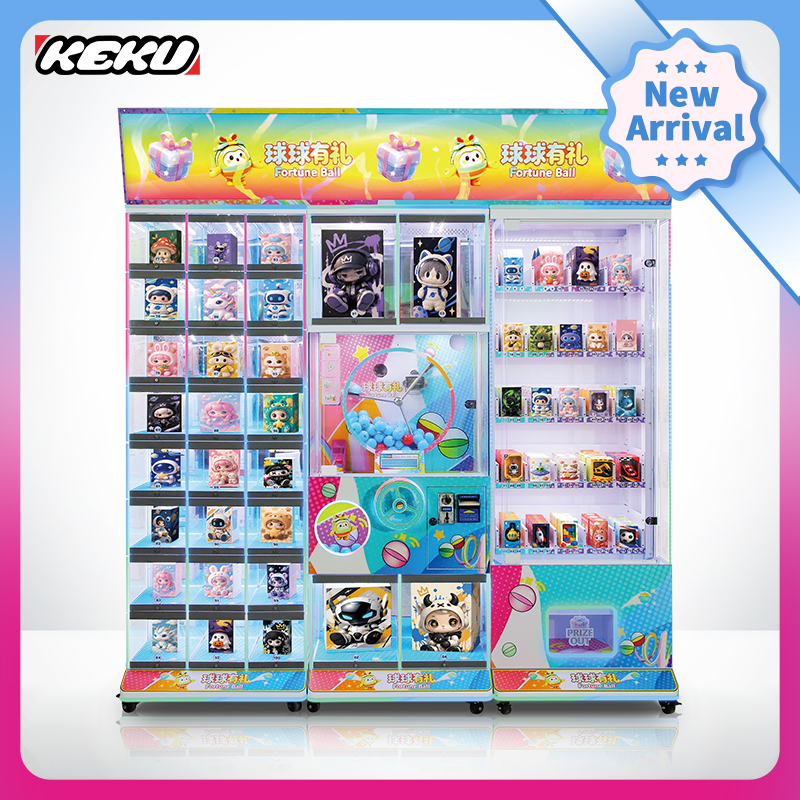
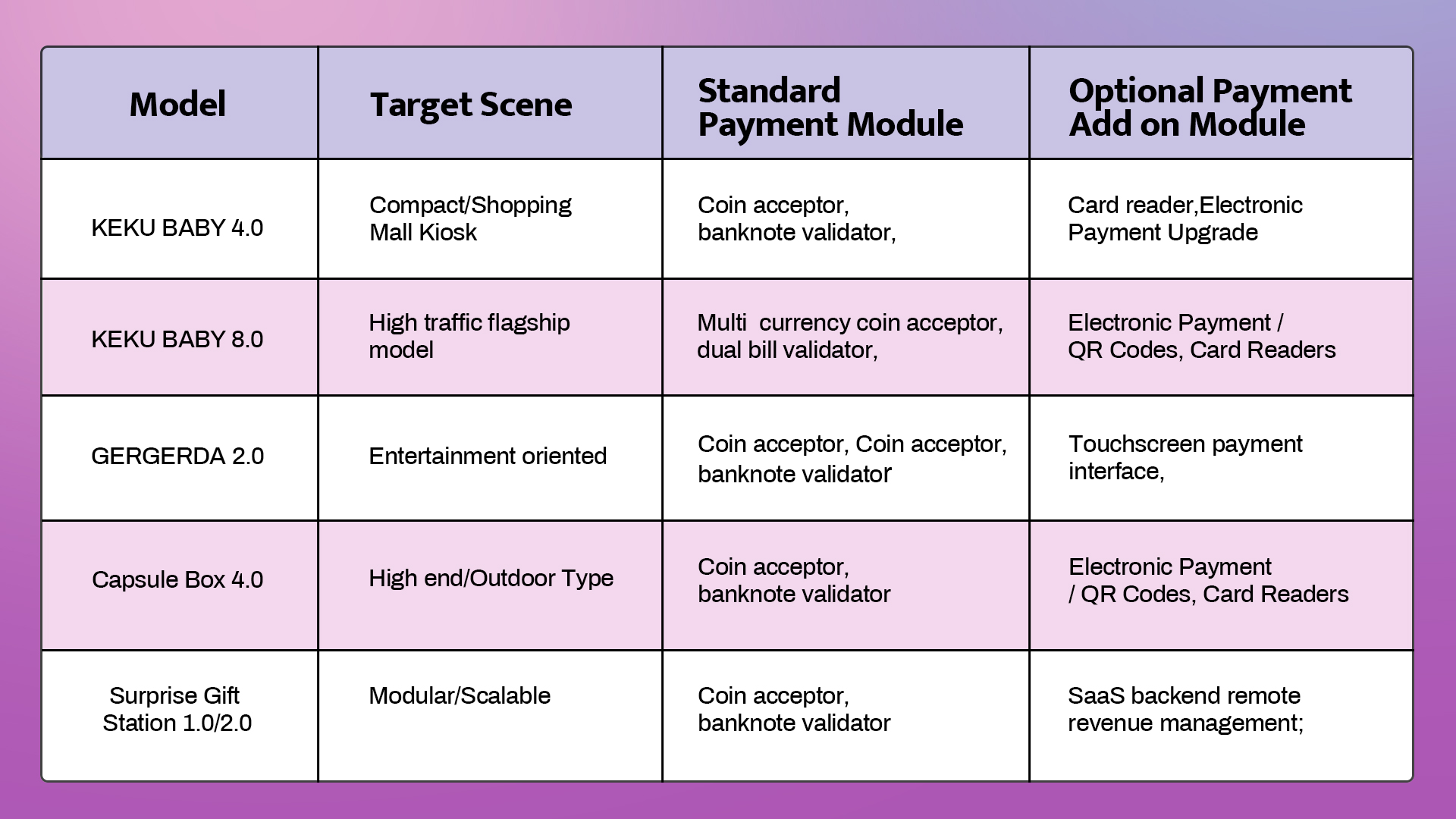
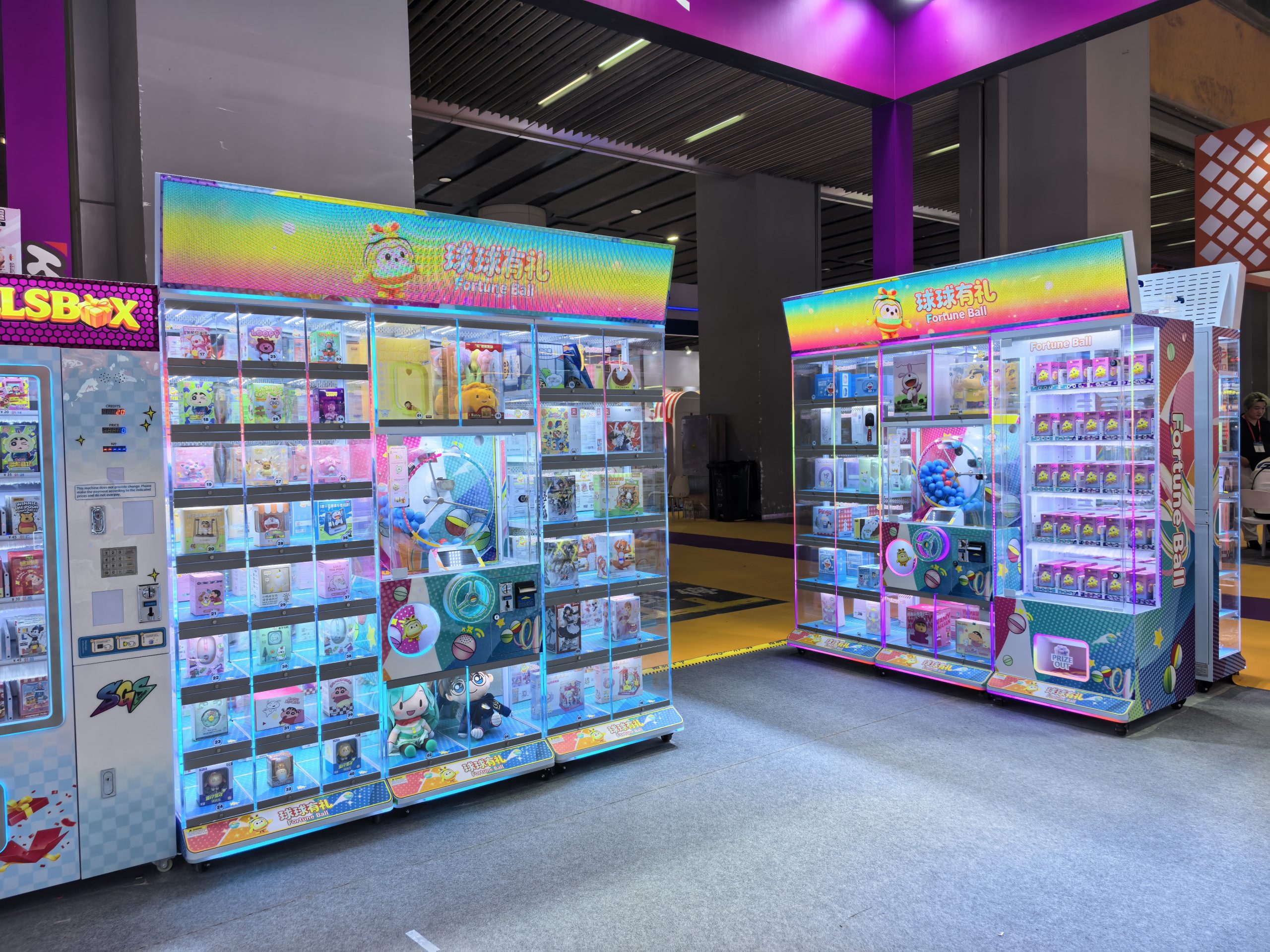
The KEKU full series capsule machine runs a shared multi-payment platform, so one cabinet can carry several modules at once. The GERGERDA 8.0, for example, ships with standard coin and bill ports in the payment zone and keeps reserved slots for QR and card-tap modules, while eight 17-inch dynamic screens handle the visual pitch.
capsule machine QR code payment
2. IC card payment: commuting traffic, converted in one tap
The transit card is the wallet of the mobile city. Suica, PASMO and ICOCA cover commuters, students and young office workers, and they are the leading payment method at stations, subway malls and transfer corridors. A Japanese capsule machine standing in a concourse is, in effect, competing for the ninety seconds a commuter has between trains.
1.Who taps
Daily commuters, white-collar staff and students pass the same cabinet twice a day and never leave home without the card. They want speed above everything, and IC card payment gives them the lowest-friction impulse purchase available. This group also buys adult-oriented IP and collectibles, knows which series is running, and will tap three or four times in a row chasing a favourite.
2.What it earns
One touch, no PIN, no change — the shortest path from seeing to buying. Station footfall repeats on a schedule, which is exactly the pattern that builds habit. Back-end data shows how often each cabinet transacts and which styles move, so restocking stops being guesswork. In Tokyo and Osaka subway hubs, transaction counts rose noticeably at many sites after readers went in.
3.Where it stops
The card only covers people inside the Japanese transit system; an inbound tourist may never have recharged one. IC card payment therefore works best deployed densely inside stations and transfer corridors, paired with new releases and limited editions that catch a commuter mid-rush. In Japan capsule point operation, that means reviewing reader data on a fixed cycle and pulling slow stock before it occupies a bin for a month.
Capsule machine payment system
3. QR payment: tourists and young collectors, and a higher price ceiling
Scanning covers PayPal, LINE Pay and overseas mobile wallets — the channels that connect inbound visitors and younger online buyers. No physical card, no coins, no queue at the change machine.
1.Who scans
Two segments. Overseas tourists rarely land with a wallet of yen or a charged transit card, and reach for the phone by reflex. Young local collectors follow point campaigns and check-in events, and will pay for large-size or limited capsules at prices well above what a coin buyer would consider. Average ticket size for this group is the highest of the three.
2.What it earns
A capsule machine QR code payment module carries products that coins cannot price. It breaks the 100-yen ceiling, supports multilingual pages, stamp collections, campaigns and social sharing, and turns a purchase into content. At airports, attractions and photo spots, it brings in visitors who previously had no way to pay at all.
3.Where it breaks
A weak signal produces the worst kind of complaint: money taken, capsule not delivered. Channel fees also apply. Deploy it where the network holds — scenic spots and large trend malls — post multilingual scanning instructions on the cabinet, and back them with limited commemorative capsules and collection campaigns that give tourists a reason to photograph and share.
KEKU full series capsule machine
4. Bill payment: the quiet growth channel
1.A lower threshold for cash-heavy habits
Japanese shoppers still use notes far more than most markets, and many players prefer them. The Japanese capsule machine that accepts only coins or app payments excludes both. The GERGERDA 5.0 smart capsule machine carries a stable bill-recognition module tuned to the denominations in local circulation, so coin and bill insertion serves the customer who has cash but no phone app.
2.A bigger basket per visit
Notes invite multi-draw: a player feeds a bill, runs several capsules in a row and starts chasing a full set. That behaviour is nothing like the single-coin pattern. Every KEKU full series capsule machine can be specified for multi-bin layouts on Japanese standard specifications, which makes complete-set collecting the natural goal and lifts average spend per customer.
3.One ledger for everything
With bill recognition in place, the GERGERDA 8.0 back-end records notes, coins and electronic orders in one place, with revenue lines that reconcile cleanly. Payment status, stock levels, fault alerts and cash-box levels are visible remotely, so collection and replenishment can be scheduled rather than guessed — and Japan capsule point operation stops depending on how often somebody happens to drive past.
Japan capsule point operation
Frequently Asked Questions
Q1: My capsule machine is located in a suburban commercial street, with a focus on local middle-aged and elderly people. Do I need a complete set of coin operated, IC card, and QR code scanning services?
A: There is no need to blindly upgrade the entire set. Priority should be given to retaining stable coin operated modules as the main force at suburban locations; If there are stations nearby, IC card readers can be installed; Scanning the code can be used as a lightweight option. These types of locations have few tourists and the incremental benefits of investing in scanning modules are limited. Priority should be given to controlling hardware costs and focusing on affordable and regular twists and turns to stabilize basic revenue.
Q2: If the Japanese capsule machine simultaneously opens three types of payments, will it increase a lot of operational pressure?
A: Reasonable combination will not significantly increase operation and maintenance. Coin operation is responsible for cash chassis, IC card captures high-frequency commuting passenger flow, and scan codes to undertake tourist increment; Now the integrated intelligent controller can view three types of payment orders in the background and separately calculate sales volume. Just need to regularly clean up the coin channel faults to ensure network stability, and you can balance conversion and operation efficiency. Many hub locations have significantly improved overall transactions after the three channels are fully equipped.
Q3: With so many capsule machines on the market, what are the highlights of KeKu Tech GERGERDA 5.0 smart capsule machine that are most suitable for our overseas procurement compared to ordinary models? Can the storage space be customized?
A: Our self-developed GERGERDA 5.0 smart capsule machine from KeKu Tech is equipped with an independent motherboard and supports multiple payments such as scanning codes, inserting coins, and swiping cards. The five screen linkage dynamic display enhances customer attraction; Adopting a pull-out warehouse compartment, replenishment is easy and safe, and it also supports remote account checking, parameter adjustment, and fault warning through mobile phones. At the same time, it supports customization of storage space size, body appearance, and lighting patterns, which can adapt to large-sized capsules, handmade gifts, and meet the gift needs of different markets in Europe, America, Latin America, and Japan. It can also be customized for large orders and is our main intelligent model for overseas customers.
